The Use of Memory
I was at Spirit Rock’s Day of Poetry (on Zoom) yesterday, hosted by Phillip Moffitt, and the lines of poetry that are still speaking to me are from T.S. Eliot’s Four Quartets, which wasn’t even one of the poems we were contemplating. But in talking about one of the poems that we were contemplating, someone made reference to the dharma in the Four Quartets, at which point Phillip promptly got out his T.S. Eliot and read this to us:
There are three conditions which often look alike
Yet differ completely, flourish in the same hedgerow:
Attachment to self and to things and to persons, detachment
From self and from things and from persons; and, growing between them, indifference
Which resembles the others as death resembles life,
Being between two lives—unflowering, between
The live and the dead nettle.
I’ve heard those lines read many times, but this time instead of stopping at that point, Phillip continued reading just a bit — and it was these extra few lines that really stuck with me:
…This is the use of memory:
For liberation–not less of love but expanding
Of love beyond desire, and so liberation
From the future as well as the past…
***
I don’t even know what those line mean, exactly. Especially: liberation from the future.
But I do know that it mean something to me. And coming to know what that something is, is important.
***
Photo by Maria Bobrova on Unsplash
2021
By Jan
 Comments Off on Starting with the Physical Body
Starting with the Physical Body
I will be sitting a Nine Bodies Insight Retreat next week so I won’t be able to lead the Tuesday Night Insight group that meets June 22 (on Zoom, 7:00pm to 8:30pm Central Time). The group will still meet and practice together however, using a guided meditation recorded by Phillip Moffitt in the Nine Bodies Insight style of practice.
The recording is titled: “Physical & Vital Bodies Guided Meditation & Reflection,” August 2020. You can find it — and many more — on the Nine Bodies website.
If you’d like to join the group next Tuesday just email me here. All are welcome.
***
Photo by Håkon Grimstad on Unsplash
2021
One’s Life Can Be a Vehicle for Blessing

I’ve been turning my attention this month to the parami of Patience, using Ajahn Sucitto’s “Parami: Ways to Cross Life’s Floods,” for inspiration. Here’s a quote that surprised and energized me (emphasis mine):
“…It is patience, if cultivated thoroughly and insightfully, that penetrates our will to do, or intention (cetana). Intention is the mental activation that seeks, wavers and tightens… Intention directs one’s attention and interest in a particular way, so corresponding concerns and aims come to mind, and sometimes speech or bodily action follows. And this is what our ‘world’ is made of.
“…The world stops, or rather doesn’t get created, when that process of seeking, wavering and tightening stops. Transcendence, or crossing over, finally means that the movement of mind, which tries to circumvent, forget, defeat, stop, divert, allay or placate — stops. In that stopping, the very conditions that appear to confront us evaporate. And through knowing that, one is unafraid of conditions; one does not hanker after them and one is not intimidated by them.
“Patience is a big part of that. With patience, instead of trying to wriggle out of suffering, one learns to be still and to release the mind from its willfulness and possessiveness…
“And you can even feel respect for the ungrateful and the exasperating. They help you to wear out your addiction to self-view, to having your own way. And they help you to lose your fascination or irritation with the personalities of other people, and all that which is just kamma and no real self at all. Then you say ‘Thank you’ to pointless situations and people who irritate you.
“This is the perfection of patience: it can make one’s life a vehicle for blessing.”
***
Photo by Greg & Lois Nunes on Unsplash
2021
With the Help of All of the Goodness
In one of the talks Phillip Moffitt gave at the recent retreat on the Four Noble Truths, he said something I don’t think I’ve ever heard him say before, at least not in those words. He talked about how we are taking responsibility for our own spiritual development and he used the phrase: “…with the help of all of the goodness that exists in the world — in the Universe…”
Which really touched a place of deep joy in me.
Here’s what he said:
“We are cultivating our own fields of understanding, our own fields of growth. We are not waiting for something to happen to us by some sort of divine means. We are responsible for our own cultivation…with the help of Sangha, with the help of all of the goodness that exists in the world — in the Universe — with the help of this mysterious nature that we are. This awareness. This mysterious awareness that allows knowing without contracting, knowing without involvement. This base of empty awareness that is responsive, but without moving towards objects.
“Very interesting — as we get deeper and deeper into seeing the nature of our own mind…maybe, say, it’s our Buddha nature…(what we mean by mind and all that can get rather complex)..but something about our nature: that not everything moves towards objects. That there is a kind of knowing that, where in a couple of places in the suttas, it is described as ‘the Unborn, the Uncreated, the Unmanifest.’ This ‘Intuitive Awareness’ as the Venerable Sumedho describes it.”
When Phillip said that we are helped by all of the goodness that exists in the world, in the Universe, something in me — something mysterious — knew that that’s true.
And that I’ve always known it.
I just didn’t know that I knew it, until I heard him said it. But now I do!
***
Photo by Artemis Faul on Unsplash
Interested in a Sunday Morning Sit?
I’m thinking about offering a new weekly sit, every Sunday morning, from 8:30 to 9:00 (Central Time), on Zoom of course. I’d ring a bell to begin and end the session — but there’ll be no check-in, no instructions, no dharma talk — just a chance to sit together as a group in noble silence.
If you’re interested, let me know by email here. It could be a little earlier in the morning or later, if that work’s better. Or it could be on a different day of the week. Just let me know. This would be a drop-in group. No need to commit to coming every week. And no fee, of course, but donations are always welcome.
I’m thinking of starting next Sunday, May 2.
Send me an email here and I’ll send you the link.
New Class in Nine Bodies Practice
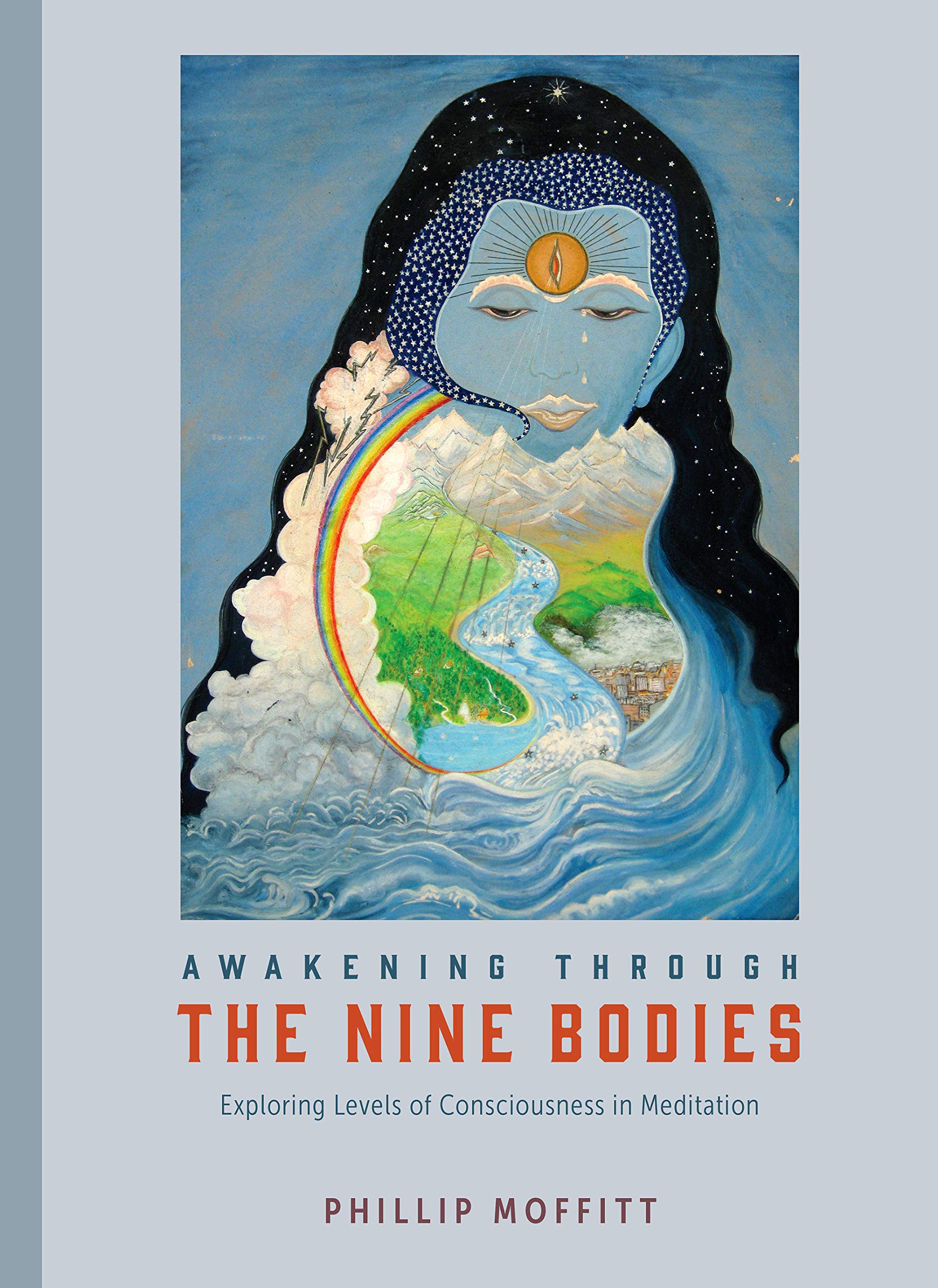
Beginning Wednesday, May 19, Jan Rosamond will be teaching a 5-week introductory class on the Nine Bodies of Consciousness as taught by Phillip Moffitt in Awakening Through The Nine Bodies: Explorations in Consciousness for Mindfulness Meditation and Yoga Practitioners.
Designed for Insight practitioners who have little or no experience with the Nine Bodies of Consciousness, this small-group class offers an introduction to the Nine Bodies practice, focusing on the first four bodies — the Physical Body, the Vital Body, the Emotional Body, and the Etheric Body.
Each class session will begin with a guided “Arriving” meditation. The first week will include an overview of the Nine Bodies as well as an introduction to the Physical Body. The Vital, Emotional, and Etheric Bodies will be introduced — one each week — over the next four sessions.
Students are asked to practice during the week between classes using assigned, guided meditations recorded by Phillip Moffitt. Each class will include time for students to share reports of their experience working with these meditations. Additional guidance, support, and reflections on practice will be offered as needed.
- Meets online via Zoom, 5 Wednesdays May 19 to June 16, 6:30 to 8:00 pm Central Time.
- Class size limited to 10 participants.
- Offered on dana basis. Suggest range: $100 to $250. A $25 deposit is required to reserve a space. If this poses a financial burden, please contact Jan by email here. I want to make these teachings accessible to everyone.
For more information or to register, email Jan here.

Hi. I’m Jan Rosamond, MBA, MFA.
I am a certified Community Dharma Leader with five years of formal training through Spirit Rock Meditation Center. I have practiced in the Insight tradition (vipassana) for more than 20 years with many teachers including Jack Kornfield, Joseph Goldstein, and Silvia Boorstein. I have completed more than 500 nights of residential retreat practice including several 1- and 2-month retreats in the U.S., South Africa, and Burma (Myanmar).
Phillip Moffitt is my mentoring teacher. I have practiced with the Nine Bodies since 2018 and am currently in training with Phillip to teach this practice.
Please join me in the Nine Bodies practice.
For more information or to register, contact Jan by email here.
2020
Metta for One’s Body

I’m having knee replacement surgery on Nov 9 so I won’t be able to lead the Tuesday Night Insight group on Nov 10. But the group will still meet, using Anushka Fernandopulle’s guided meditation: Metta for One’s Body.
If you’d like to participate, send me an email here (by Nov 8) and I’ll send you a link.
***
Photo by Vanessa Kintaudi on Unsplash
2020
Steady State of Pleasure

Next week I’ll be attending (online) Spirit Rock’s Fall Insight retreat, so I won’t be leading the Oct 6 Tuesday Night Insight Zoom group. But the group will still meet and will listen to Ajahn Sucitto’s guided meditation titled: Internal Happiness. (30 min)
Sucitto says, “Meditation offers the opportunity to encourage the body to open into a more steady state of pleasure than is normally attainable through sense contact. This internal happiness has to do with the body’s subtle energy. Guidance is given to sense the subtle body and experience this internal happiness.”
Sounds good, doesn’t it. (It is!)
You can listen on your own any time by clicking on the link above. Or listen with the group on Oct 6, 7:00 pm CT. (Email me here to request the Zoom link.)
***
Photo by Lidya Nada on Unsplash
2020
Soothing Nervous Energy
I’ll be attending Phillip Moffitt’s retreat on the Nine Bodies next week so I won’t be able to lead the next Tuesday Night Insight group.
But the group will still meet — on Zoom, Aug 11, from 7:00 to 8:30 pm Central Time — and will practice using Ajahn Sucitto’s guided meditation with instructions for: Soothing Nervous Energy through Breathing and Body. (24 min)
Send me an email here if you’d like to attend and I’ll send you the Zoom link.
***
Photo by Priscilla Du Preez on Unsplash
2020
By Jan
Comments Off on Attention: Broad and Open, Like a Loop
Attention: Broad and Open, Like a Loop

I won’t be leading DharmaTown’s Tuesday Night Insight Group next week (June 2) because I’ll be attending Phillip Moffitt’s Nine Bodies retreat (May 28-June 4) as part of my teacher training.
But the group will still meet and meditate (on Zoom), using Ajahn Sucitto’s Body Sweeping meditation. (This guided meditation is 32 minutes long with intermittent periods of silence. Click here to listen.)
Sucitto writes: “Body sweeping meditation encourages attention that gathers around an object. Rather than absorbing into phenomena, attention remains broad and open, like a loop.”
Email me here for the NEW Zoom link for DharmaTown’s Tuesday Night Insight Group, which meets every Tuesday from 7:00 to 8:30 pm. The link will be good June through August.
I’ll be back to lead the group again on June 9.
***
Photo by Daria Shevtsova on Unsplash